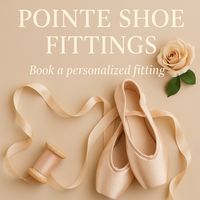
Pointe Shoe Fittings & Education
Every dancer’s journey begins with the right foundation. Discover the importance of proper pointe shoe fittings, personalized support, and finding the perfect fit for your unique feet.
Pointe Shoe Information & Fittings
The Importance of a Proper Pointe Shoe Fit
Every dancer’s feet are unique, and finding the right pointe shoe is an essential part of their ballet journey. A properly fitted pointe shoe provides support, stability, and comfort while allowing the dancer to develop proper technique and confidence.
Pointe shoes are not one-size-fits-all. Foot shape, flexibility, strength, alignment, and individual technique all play an important role in determining the most suitable shoe.
Your First Pair of Pointe Shoes
Getting your first pair of pointe shoes is an exciting milestone in a dancer’s training. Before beginning pointe work, dancers should receive approval from their ballet instructor and demonstrate the necessary strength, control, alignment, and technical foundation.
Age alone does not determine pointe readiness.
What to Expect During a Pointe Shoe Fitting
During a professional pointe shoe fitting, several factors are taken into consideration, including:
Foot shape and toe length
Arch flexibility and strength
Foot width and compressibility
Proper alignment and placement
Box shape, vamp length, and shank strength
Comfort, support, and stability
Dancers may try on several styles, sizes, and brands to determine which pointe shoe best complements their individual needs.
Preparing for Your Fitting
To help ensure a successful fitting, dancers should:
Wear convertible ballet tights.
Keep toenails neatly trimmed.
Bring any toe pads or accessories they currently use.
Bring their current pointe shoes if they have previously danced en pointe.
Share any concerns or difficulties experienced with previous shoes.
Obtain instructor approval before purchasing their first pair.
How Should Pointe Shoes Fit?
Pointe shoes should feel snug and supportive without causing sharp pain, excessive pressure, or numbness. The toes should remain straight inside the shoe rather than curling or overlapping.
A properly fitted shoe should support the dancer both on flat and en pointe while encouraging correct alignment.
When Should Pointe Shoes Be Replaced?
Pointe shoes naturally break down with use. Signs that it may be time for a new pair include:
A softened or weakened shank
Loss of support in the box
Reduced stability en pointe
Sinking into the shoe
Changes in foot size or shape
Regular fittings are encouraged as a dancer’s feet, strength, and technique develop.
Caring for Your Pointe Shoes
Proper care can help extend the life of your pointe shoes. Allow shoes to air-dry completely after each use, remove toe pads, and store shoes in a breathable mesh bag.
Avoid leaving damp pointe shoes in a closed dance bag.
Every Dancer Deserves the Right Fit
Finding the right pointe shoe is about more than size or appearance. It is about supporting each dancer’s individual journey, promoting healthy technique, and building confidence from the ground up.
Pointe Shoe Fitting FAQs
Everything you need to know before, during, and after your pointe shoe fitting.
How do I know if I am ready for pointe shoes?
Dancers should receive approval from their ballet instructor before beginning pointe work. Proper strength, alignment, balance, flexibility, and technical ability are essential for pointe readiness.
Do pointe shoes hurt?
While pointe shoes may feel unfamiliar and create some pressure, they should not cause sharp pain, numbness, or excessive discomfort. A properly fitted pointe shoe should feel snug, secure, and supportive.
Should I purchase pointe shoes with room to grow?
No. Pointe shoes should fit the dancer’s feet at the time of purchase. Excess room can compromise stability, alignment, and support.
Can I purchase the same pointe shoes online?
Although experienced dancers may reorder their current shoes, regular professional fittings are recommended. Feet, strength, flexibility, and technique can change over time.
How long do pointe shoes last?
The lifespan of a pointe shoe varies depending on the dancer’s strength, training schedule, foot perspiration, shoe construction, and care. There is no universal replacement schedule.
Can I wear pointe shoes without previous ballet training?
Pointe work requires a strong ballet foundation and proper instruction. Dancers should never begin pointe work without appropriate training and instructor approval.
Do I need toe pads?
Padding needs vary from dancer to dancer. Toe pads and other accessories should be selected during the fitting to ensure they complement the shoe without compromising its fit.
Are more expensive pointe shoes better?
Not necessarily. The best pointe shoe is the one that properly supports your individual foot shape, strength, alignment, and technique, regardless of price or brand.
Why do dancers wear different brands and styles?
Every dancer has unique feet and technical needs. A shoe that works beautifully for one dancer may not be suitable for another.
Should I sew my pointe shoes immediately after my fitting?
We recommend confirming your instructor’s approval and reviewing the applicable return or exchange policy before sewing ribbons or elastics, breaking in the shoes, or making any alterations.
Sewing Pointe Shoe Ribbons & Elastics
A guide to preparing your pointe shoes for the studio.
Properly sewn ribbons and elastics are an essential part of preparing pointe shoes for the studio. Correct placement helps keep the shoe secure while allowing for comfortable, natural movement.
Before You Begin: Instructor Guidance & Approval
At Southern Dance Supply, we recognize that ballet instructors and training programs may have individual preferences regarding ribbon and elastic placement, sewing techniques, and pointe shoe preparation.
The following instructions outline commonly used sewing methods and are intended to complement the education dancers receive in the studio. We strongly encourage dancers to obtain instructor approval before sewing or making any permanent alterations to their pointe shoes. Always follow your instructor’s specific recommendations.
What You Will Need
•Properly fitted pointe shoes
•Pointe shoe ribbons and elastics
•Sewing needle and strong matching thread
•Scissors
•Pencil or removable fabric marker
Sewing Your Ribbons
Fold the heel of the pointe shoe forward to create a crease that serves as a starting guide for ribbon placement.
Position the ribbon against the inside lining, angling it slightly forward toward the toe of the shoe.
Fold the raw end of the ribbon underneath itself to help prevent fraying.
Secure the ribbon using small, strong stitches around the edges of the attachment area.
Repeat on both sides of each pointe shoe.
Ribbon placement may vary depending on the dancer’s arch, foot shape, shoe construction, and instructor’s preferences.
Sewing Your Elastics
Elastics help keep the heel of the pointe shoe securely positioned. Common configurations include a single loop around the ankle or two elastics crossed over the top of the foot.
Determine your instructor’s preferred elastic configuration.
Measure the elastic while wearing your pointe shoe, allowing additional length for sewing.
Mark the desired attachment points and remove the shoe.
Secure the elastic using small, strong stitches.
Check that the elastic provides security without restricting circulation or natural movement.
Important Reminders
Obtain instructor approval before sewing or altering your shoes.
Never sew through the drawstring casing.
Avoid stitching through the exterior satin whenever possible.
Avoid cutting ribbons or elastics too short.
Review our return and exchange policy before making alterations.
Have your instructor review your completed shoes before beginning pointe work.
Every dancer’s feet are unique, and ribbon and elastic placement should reflect their individual needs. At Southern Dance Supply, we are committed to supporting dancers while respecting the expertise and teaching methods of their ballet instructors.
Looking for More Detailed Instructions?
Explore our comprehensive guide to sewing pointe shoe ribbons and elastics in Beyond the Barre — A Southern Dance Supply Journal, where we share additional sewing techniques, placement recommendations, and answers to frequently asked questions.